

The Rise of the Pop-Up Tent: From Fiberglass Poles to Two-Second Pitching
A conventional tent asks you to assemble the frame before it can hold up the fabric. A pop-up tent arrives with the frame already built in. Release the folded frame, and the shelter takes shape in seconds. That change made a tent practical for a family’s afternoon in the park as well as a weekend at the campsite. It also opened the door to portable shelters for farms, worksites and emergency response.
How fiberglass changed the tent pole
Fiberglass gave tent designers a way to make slender supports that bend into an arch and spring back when released. A solid fiberglass rod consists of glass fibers held together by a resin. Its diameter and construction affect how easily it bends and how much force it takes to hold the fabric in shape. A gently bowed canopy support and a tightly coiled pop-up frame therefore call for different rod designs.
Published patents trace how fiberglass supports evolved in tents. A U.S. patent issued in 1976 described fiberglass arches assembled from short, interlocking tubular sections. That design documents the use of fiberglass in tent frames, specifically in hollow sections. By 1989, another patent showed flexible fiberglass rods bowing diagonally between the corners of a collapsible children’s tent. A 2022 patent publication explicitly specified a solid fiberglass rod for a tent’s eave support. These examples show the material serving several roles, from manually assembled arches to flexible supports incorporated into the shelter.
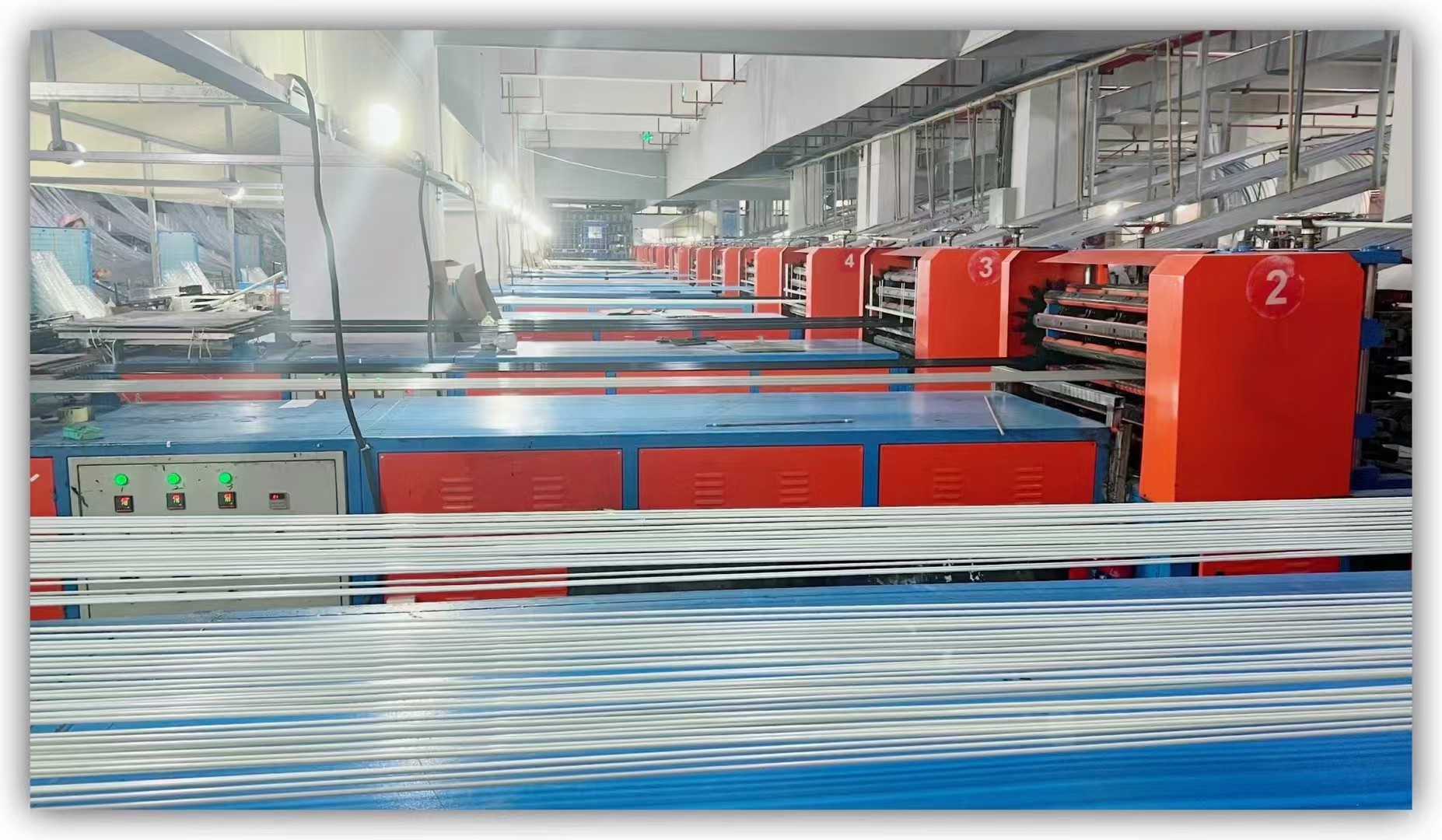
How flat spring steel made tents spring open
A 1976 U.S. patent, filed in 1974, described a self-erecting portable shelter with a frame made from flat spring-steel stock. The strip could be twisted and coiled for transport. On release, it sprang back toward its working shape and drew the fabric into position. In designs like this, the frame itself supplies the force that opens the shelter.
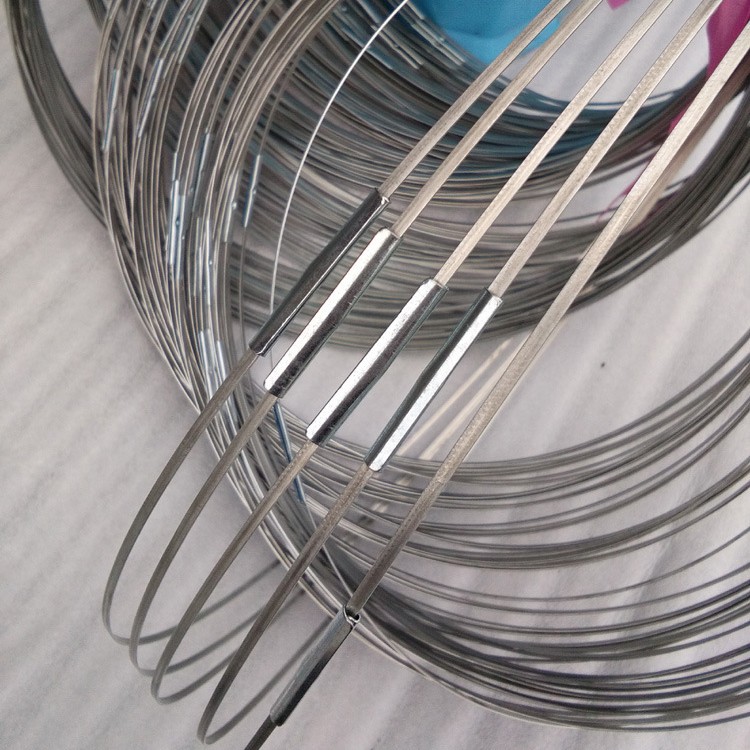
High-elasticity flat steel wire, also called flat spring-steel strip, bends more readily in one direction than the other. That property gives designers a way to control how a frame coils for storage and how it supports a panel once open. A later patent issued in 2000 described a self-erecting tent built around flexible loops, showing how designers continued to refine the geometry of shelters that could open and pack without assembling separate poles.
What Decathlon did with the 2 Seconds tent
Decathlon’s Quechua team began developing the 2 Seconds tent in 2003 and launched it in 2005. Self-opening, single-wall shelters already existed. The team’s contribution was to turn the idea into a practical double-wall camping tent, with a separate inner chamber and outer fly that deployed together. The result brought the convenience of a pop-up frame to a tent people could take on an ordinary camping trip.
For first-time campers, the difference was straightforward. The tent could take shape as soon as it came out of the bag, with no loose poles to sort or thread through sleeves. The remaining steps, such as staking and tensioning guylines where needed, still mattered. But once pitching the frame took seconds, putting up a shelter for a short outing started to make sense.
Umbrella-style frames took a different route
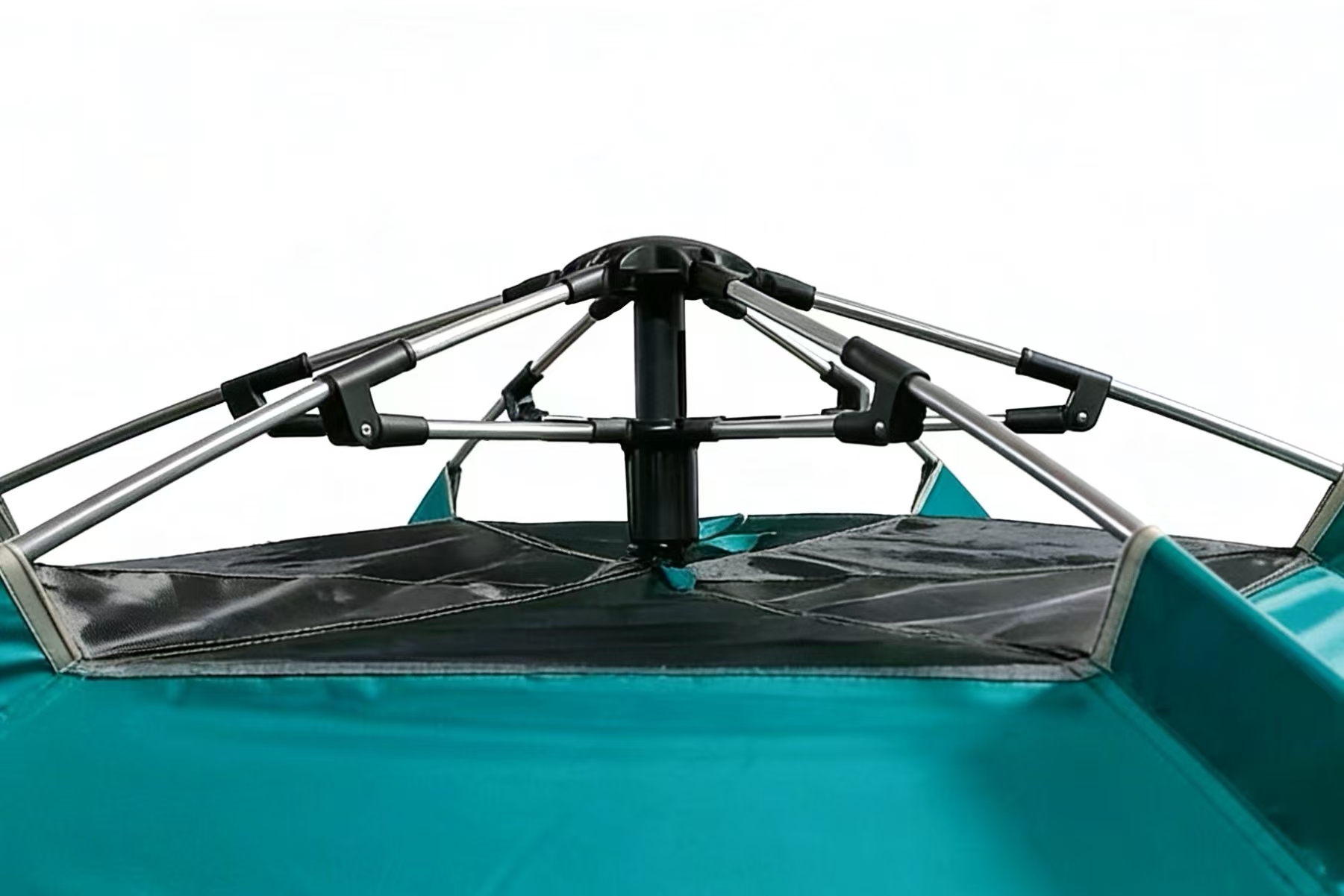
Umbrella-style tents use hinged ribs that spread from a hub. The idea has a long history. An American patent granted in 1900 described a canvas shelter whose ribs opened around a central pole. A 1975 tent patent used pivoting ribs and a hub that snapped into its deployed position. By 1988, another patent described a folding dome framework with six ribs pivoting around a central hub.
On a modern hub-style shelter, the user spreads or pulls the frame into position, and the attached fabric opens with it. Many designs fold into a long bundle. That gives buyers a different packing format from the broad, flat disc typical of a twist-fold tent.
The trade-off of the round carry bag
A round carry bag is easy to slide into a car trunk or carry from a parking lot to a picnic spot. On a long hike, that same disc can be awkward to secure to a backpack. Folding the frame back into its bag also takes practice, so packing up can take longer than pitching.
Those trade-offs make many round-pack pop-ups a good fit for weekend park trips, festivals and car camping. Some models are designed for overnight stays at established campsites. For backcountry trips and exposed overnight use, packed dimensions, weight, ventilation, weather protection and anchoring all deserve more weight in the buying decision.
Beyond camping
A fast-opening frame is useful wherever a fabric enclosure needs to go up, come down and move to a new location. On a farm, it can shade a field station or support a temporary crop cover. At a worksite, it can provide a portable enclosure for a task or a sheltered area for crews. During emergency response, it can support temporary registration, distribution or privacy areas. The same frame principles also work for changing booths, equipment covers and other foldable outdoor textile products.
Each application puts different demands on the frame and fabric. A crop cover may need to move frequently, while a work shelter may need a wide entrance and dependable anchoring. A temporary privacy enclosure may place more emphasis on coverage and quick relocation.
Work with POP Outdoor (Ningbo) Co., Ltd.
At POP Outdoor (Ningbo) Co., Ltd., we’ve been making tents since 2008. We manufacture traditional hand-pitched tents and specialize in two-second and other quick-deploy designs, including models with fiberglass rods, flat spring-steel frames and umbrella-style hubs. We also develop quick-opening textile products for applications beyond camping.
If you’re sourcing a pop-up tent or developing a foldable textile product, get in touch with POP Outdoor. We’d be happy to discuss your intended use, packed dimensions and frame options.